After a month-long break, I feel it's high time to get back to blogging and start enlightening others (myself included).
So from today onward, I shall commit to once again writing about fresh and relevant internet marketing and freelance-related articles for your viewing pleasure!
Until then, bon voyage!

Tuesday, 26 November 2013

Thursday, 19 September 2013
Top 5 Social Networks to Boost Your Business
Social networks today are an inseparable part of our lives. Whether it's for socialization or commercial purposes, the reach of social networks is virtually limitless. They constitute one of the essential modern inbound marketing techniques used by businesses to increase web traffic and internet sales.
In this article, I'll outline some of the major social networking sites and how they can be most effectively leveraged by businesses big and small to drive traffic and sales through social media marketing.

Below is a list of the top 5 social networks that can boost your business*:
Tuesday, 10 September 2013
Freelance Finances - Getting Down to Business
Hi everyone,
When it comes to managing your payments while freelancing, sometimes it can get quite confusing and frustrating to deal with. You have to figure out what type of job you're looking for (job category, fixed vs. hourly), job skill requirements, the amount/rate, the hours, the output expected, turnaround times and how exactly your going to receive payment. For the novice freelancer, it can be a lot to handle in the first few months.
In this article, I will humbly outline some of the major online financial payment systems available to both freelancers and clients alike which facilitates the transfer and receipt of earnings.
Freelancing Payment Methods
Once you have nabbed a job or two, you are then ready to establish a payment gateway to receive your funds. Before diving in and highlighting the major freelancing payment methods available to you, you should first understand the differences between fixed jobs and hourly jobs, work schedule and work week and marketplace guarantees and liability exclusions (for payments, performance, dispute resolution, etc.)

When it comes to managing your payments while freelancing, sometimes it can get quite confusing and frustrating to deal with. You have to figure out what type of job you're looking for (job category, fixed vs. hourly), job skill requirements, the amount/rate, the hours, the output expected, turnaround times and how exactly your going to receive payment. For the novice freelancer, it can be a lot to handle in the first few months.
In this article, I will humbly outline some of the major online financial payment systems available to both freelancers and clients alike which facilitates the transfer and receipt of earnings.
Freelancing Payment Methods
Once you have nabbed a job or two, you are then ready to establish a payment gateway to receive your funds. Before diving in and highlighting the major freelancing payment methods available to you, you should first understand the differences between fixed jobs and hourly jobs, work schedule and work week and marketplace guarantees and liability exclusions (for payments, performance, dispute resolution, etc.)

Monday, 2 September 2013
The Wonders of Inbound Marketing
Inbound marketing is a truly wonderful concept. It's so potentially powerful and effective to leverage for businesses that it can easily outperform traditional outbound marketing methods with a fraction of the cost. So then why don't all businesses harness this tool and why are most people unfamiliar with the term? I'll try to demystify this priceless concept in this article.

For starters, let's first look at what constitutes the 'old way' of how companies market their products:
- Traditional marketing (also called outbound marketing) is a 'push-based' system that uses paid methods like TV ads, direct mail, cold calling (synonymous with telemarketing) and trade shows to bring attention to the minds of potential leads.
- It's often costly, out of the control of the paying company and generally hard to measure in terms of effectiveness and response.
- Communication is usually one-way
- Customers are sought out (often without permission)
- Marketers are not motivated to educate and entertain
In contrast, the 'new way' of marketing products deals with:
- The careful use of online tools and technologies like SEO marketing, content management, email marketing, video/podcast management, RSS feeds and social media engagement.
- It's cheap, easily to implement and can be more readily measured and tracked
- Communication is interactive and two-way
- Customers approach YOU through search engines, social media and referrals
- Marketers are more motivated to educate and entertain
- SEO methods aim to improve a site's visibility on the pages of a search engine with inbound marketing companies actively seeking to rank their pages higher based on their keyword sets.
- Content management deals with generating fresh, unique and interesting content for visitors to the site in the form of web articles, blog posts, infographics, ebooks or other value-added content. It's often meant to educate and entertain and is also the best way to organically improve your SEO ranking.
- Different from the more traditional cold selling email blasts, I'm talking about the careful use of newsletters and bulletins within your site. It's a great way to ensure that visitors are constantly returning back to read new and relevant content, establish relationships as well as potentially convert leads into customers.
- Nowadays it seems that people are more interested in learning through watching than by reading. Therefore, by embedding relevant videos (Youtube, Vimeo, etc) into your site or by uploading regularly-updated podcasts, you can reach out to the new generation and keep them hooked and coming back for more.
- Probably the cheapest and most effective means of inbound marketing today is the use of social networking sites to drive traffic to your site. By regularly updating your Twitter, Facebook, Google +, Linkedin, Pinterest or Reddit accounts, you can better solidify relationships with both existing and potential customers and clients.
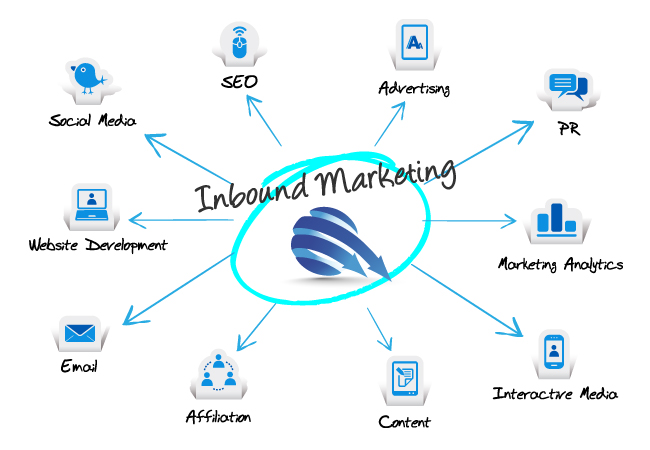
As I've outlined, in stark contrast to traditional outbound marketing that relies heavily on 'pushing' goods and services to the customer's doorstep, inbound marketing is subtle and requires the customer to be 'pulled' to the company. The very foundation is reversed on its head.
Today the very paradigm of how businesses do business is different. Before, companies were in control, but now, it's the user that has greater control and are themselves actively involved in content creation and publication. The lines are becoming increasingly blurred.
Inbound marketing is here to stay and is rapidly becoming an essential tool for any business with an online presence. It's a brave new world in the marketing arena where change is the only constant, so if you are a budding blogger/webmaster/freelancer that can't adjust to the changing dynamics, then you'll find yourself quickly eating everyone else's dust and losing steam.
Don't fall behind, embrace the inbound marketing wave!
Friday, 30 August 2013
10 Tips for Writing More Effective Copy
Hello everyone,
When it comes to writing compelling, informative and original copy, it can often become tough to figure out where to start first. As freelance copywriters, we are expected to deliver 110% each and every time we write up new content. So when it comes to improving our game, what are some tips that we can apply to write more effective copy?
I have prepared a modest list of 10 tips for your viewing consideration to make you (as well myself) more proficient in writing copy - whether it be for marketing, informational, academic or any other purpose.

Below are 10 tips for writing more effective copy:
10. Grammar - as a prerequisite, you should know where semicolons belong, where to place exclamation marks and the best times to use contractions. Basic English is a must to advance to better copywriting.
9. Avoid cliches - you should at all times expect your audience to be seeking only relevant information and content that's entirely original and genuine. So try to not quote Shakespeare or Hemingway the next time you write up a professional copy and instead make up your own quotes or at least use something more relevant and up to date!
8. Use action words - whether your writing a sales letter, PR email or padding your personal resume, you should include a few power words like "challenge," "succeed," "delight," or "love" - among others. Be sure to check specialty websites that provide loads of lists relating to actionable words and verbs used for copy.
7. Be wary of jargon - try to avoid using technical language and jargon as best as you can. You don't want to alienate readers. However if the situation warrants, then use it moderately so as to not sound too pretentious or full of yourself.
6. State the facts - avoid inserting value judgments and personal opinions into the copy as doing so will undermine any credibility that you seek to attain. Instead, use concrete, reliable sources for supporting your argument and validating your conclusions.
5. Be flexible - any decent writer can write on a wide variety of topics with ease. However, it takes a good writer to write topics using different angles and styles. Good writers can write an article humorously, tragically or in a totally stone-cold no-nonsense manner with no emotion whatsoever. What's important is that the angle must be the most appropriate for your audience.
4. Generate feeling - you wan't your audience to relate to you and express sympathy, affection or support. Whether it's to urge them to a call-to-action or sign them up to a newsletter, you need to captivate readers and make them some desired emotion(s).
3. Know your audience - even before putting pen to paper (excuse me for the outdated cliche), you need to first figure out who you are writing to. This helps you tailor your writing more to the interests of your target audience better by making the content more relevant and worthwhile for their viewing.
2. Mind the formatting - if your content looks sloppy and unprofessional, then the chances of the audience reading on will drop significantly. You'll have to familiarize yourself with the basics of copy formatting whether it's: optimum sentences per paragraph, where to place bullet points and lists and how many, choice of titles and subtitles and use of summaries before the main article. Basically, you want your copy to look as amazingly eye-catching as possible to entice your audience to read it and take action.
1. Have a goal in mind - what's the purpose of your copy anyway? Is it to provide information? Is it to generate goodwill? Or is to sell your company's products? Having a clear goal in mind before writing your copy will help to ensure that your final draft will have the correct call to action and will maximize you and your company's targets and objectives seamlessly.
So there you have it. A humble list that you can reference to hone your article writing and copywriting skills. Frankly speaking, I myself am still learning a great deal about the fine art of copywriting and am acquiring something new everyday. There are practically HUNDREDS of tips out there that promise to improve your copywriting so in no way is my list comprehensive. What's important is that it should serve as a foundation for improving your writing and copywriting abilities.
For my next article, I will dabble on the mystical nature of inbound marketing and it's important for online (and offline) businesses.
When it comes to writing compelling, informative and original copy, it can often become tough to figure out where to start first. As freelance copywriters, we are expected to deliver 110% each and every time we write up new content. So when it comes to improving our game, what are some tips that we can apply to write more effective copy?
I have prepared a modest list of 10 tips for your viewing consideration to make you (as well myself) more proficient in writing copy - whether it be for marketing, informational, academic or any other purpose.

Below are 10 tips for writing more effective copy:
10. Grammar - as a prerequisite, you should know where semicolons belong, where to place exclamation marks and the best times to use contractions. Basic English is a must to advance to better copywriting.
9. Avoid cliches - you should at all times expect your audience to be seeking only relevant information and content that's entirely original and genuine. So try to not quote Shakespeare or Hemingway the next time you write up a professional copy and instead make up your own quotes or at least use something more relevant and up to date!
8. Use action words - whether your writing a sales letter, PR email or padding your personal resume, you should include a few power words like "challenge," "succeed," "delight," or "love" - among others. Be sure to check specialty websites that provide loads of lists relating to actionable words and verbs used for copy.
7. Be wary of jargon - try to avoid using technical language and jargon as best as you can. You don't want to alienate readers. However if the situation warrants, then use it moderately so as to not sound too pretentious or full of yourself.
6. State the facts - avoid inserting value judgments and personal opinions into the copy as doing so will undermine any credibility that you seek to attain. Instead, use concrete, reliable sources for supporting your argument and validating your conclusions.
5. Be flexible - any decent writer can write on a wide variety of topics with ease. However, it takes a good writer to write topics using different angles and styles. Good writers can write an article humorously, tragically or in a totally stone-cold no-nonsense manner with no emotion whatsoever. What's important is that the angle must be the most appropriate for your audience.
4. Generate feeling - you wan't your audience to relate to you and express sympathy, affection or support. Whether it's to urge them to a call-to-action or sign them up to a newsletter, you need to captivate readers and make them some desired emotion(s).
3. Know your audience - even before putting pen to paper (excuse me for the outdated cliche), you need to first figure out who you are writing to. This helps you tailor your writing more to the interests of your target audience better by making the content more relevant and worthwhile for their viewing.
2. Mind the formatting - if your content looks sloppy and unprofessional, then the chances of the audience reading on will drop significantly. You'll have to familiarize yourself with the basics of copy formatting whether it's: optimum sentences per paragraph, where to place bullet points and lists and how many, choice of titles and subtitles and use of summaries before the main article. Basically, you want your copy to look as amazingly eye-catching as possible to entice your audience to read it and take action.
1. Have a goal in mind - what's the purpose of your copy anyway? Is it to provide information? Is it to generate goodwill? Or is to sell your company's products? Having a clear goal in mind before writing your copy will help to ensure that your final draft will have the correct call to action and will maximize you and your company's targets and objectives seamlessly.
So there you have it. A humble list that you can reference to hone your article writing and copywriting skills. Frankly speaking, I myself am still learning a great deal about the fine art of copywriting and am acquiring something new everyday. There are practically HUNDREDS of tips out there that promise to improve your copywriting so in no way is my list comprehensive. What's important is that it should serve as a foundation for improving your writing and copywriting abilities.
For my next article, I will dabble on the mystical nature of inbound marketing and it's important for online (and offline) businesses.
Subscribe to:
Posts
(
Atom
)